
Monocular vs Spotting Scope of 2026 for Field Clarity
Compare clarity and pack weight in September 2026. Our monocular vs spotting scope guide breaks down zoom, glass quality, and field performance.
 By Andrew McKean
Updated September 27, 2026
By Andrew McKean
Updated September 27, 2026
Balancing Optical Reach and Pack Weight in the Field
Heavy glass weighing down backcountry packs can turn an all-day trek into a brutal grind, especially when heat mirage washes out distant details before you can even stabilize a heavy tripod. Stashing a pocket-sized optical tube in a chest harness saves critical ounces, but dropping magnification means giving up the fine resolution needed to identify horn tips or bullet holes past 300 yards. Navigating the monocular vs spotting scope debate comes down to deciding between instantaneous handheld speed and rock-solid magnification for extended glassing sessions. Optical design trade-offs, like objective lens diameter, exit pupil size, and glass coatings, determine whether a tool matches your field demands. To see how other handheld systems stack up, check out our guide on spotting scopes vs binoculars.
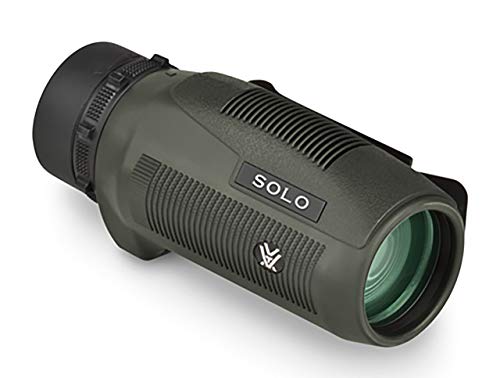
Light gathering and lens size dictate how much usable detail reaches your eye during dawn and dusk when game moves most actively. A compact monocular like the Vortex Solo Monocular 8×36 delivers fast target scans with virtually no weight penalty, while full-size spotting scopes offer superior resolution across open basins. If your observation style requires long hours of stationary viewing, evaluating angled vs straight spotting scope bodies helps prevent persistent neck fatigue. Based on our detailed comparison of glass types, objective diameters, and user feedback, picking the right optic depends entirely on your need for mobility versus optical reach.
| Award | Product | BSP Score About BSP ScoreThe BSP Score is our own rating from 0 to 10, based on performance, design and build, ease of use, and value. It reflects independent research and is never influenced by manufacturers, retailers, or affiliate commissions. Learn more › | |
|---|---|---|---|
| Best Overall |
Vortex Solo Monocular 8x36
|
9.2/10 | Buy |
 12x60 HD Monocular Telescope for Adults
|
8.1/10 | Buy | |
| Best Budget |
 Celestron Nature 10x25 Monocular for Hiking
|
7.8/10 | Buy |
Frequently Asked Questions
Can a monocular replace a spotting scope for target shooting?
No, a monocular cannot replace a dedicated spotting scope for resolving bullet holes beyond 100 yards. Most compact monoculars top out at 8x or 12x magnification, whereas target scopes often reach 60x with 80mm objective lenses. The smaller glass and natural handheld tremor blur tiny impact marks on paper targets at long range.
What is the key performance difference in monocular vs spotting scope setups?
Spotting scopes provide higher optical magnification and superior low-light resolution, while monoculars excel in lightweight portability and fast deployment. Full-size field scopes require a steady tripod to harness their 20x to 60x zoom range. In contrast, handheld monoculars like the Vortex Solo Monocular 8×36 weigh ounces and slip into a chest pocket for quick scans in 2026.
Do you need a tripod to use a high-power monocular?
Yes, mounting optics with 12x magnification or higher on a tripod provides essential image stabilization. Handheld micro-shakes severely degrade image sharpness on powerful optics like the 12×60 HD Monocular Telescope for Adults. Lower-power 8x monoculars remain easy to steady offhand, but higher magnification demands support for detailed observation.
How does exit pupil size affect low-light viewing?
Exit pupil diameter determines image brightness by measuring how much light beam reaches your pupil. An 8×36 monocular yields a generous 4.5mm exit pupil that keeps images bright in dark timber. While large spotting scopes also capture abundant light at low magnification, checking our list of the best Vortex spotting scopes reveals how high zoom levels narrow the beam in twilight.
Can you comfortably look through these optics while wearing eyeglasses?
Yes, optics featuring twist-up eyecups and generous eye relief accommodate prescription eyeglasses easily. Collapsing the eyecup positions your eye at the proper focal distance without cutting off the angular field of view. Models like the Celestron Nature 10×25 Monocular for Hiking provide twist-up mechanisms to prevent optical blackout and black-ring vignetting.
About the author

Andrew McKean is an experienced outdoor journalist and optics specialist with extensive experience evaluating binoculars, spotting scopes, and other outdoor optical equipment. His work combines practical field testing with detailed technical analysis, helping readers understand optical performance, durability, and the features that matter when comparing equipment.