
Night Vision Goggles Review of 2026 Top Picks
Our night vision goggles review breakdown for September 2026 highlights 4K digital sensors, covert IR illumination, and battery endurance for night observation.
 By Tony Flanders
Updated September 27, 2026
By Tony Flanders
Updated September 27, 2026
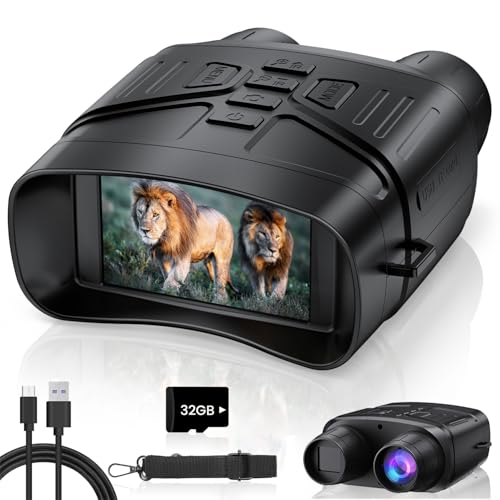
Scanning open pastures in pitch darkness reveals how quickly budget digital sensors turn subtle details into grainy silhouettes. Identifying game against thick brush demands balanced magnification, clean sensor resolution, and proper infrared illumination. Whether checking perimeter fences or monitoring trails, an objective night vision goggles review helps you distinguish practical electro-optics from novelty gear. Manufacturer specifications and verified feedback show that pairing a crisp digital display with a reliable infrared illuminator prevents foreground washout while maintaining crisp target outlines. If you already run a dedicated night vision scope, a handheld unit prevents rifle flagging during scanning.
Long nocturnal sits also expose how rapidly cold ambient air drains internal power packs and degrades sensor refresh rates. Many outdoorsmen struggle when budget infrared illuminators emit a bright red glow that spooks cautious game. Modern digital optics solve this issue with selectable output levels between covert 940nm beams and longer-reaching 850nm wavelengths. Combining these infrared options with generous rechargeable battery capacities ensures you can glass wooded edges for hours. Exploring these digital tools alongside clip-on scope setups provides complete property awareness.
| Award | Product | BSP Score About BSP ScoreThe BSP Score is our own rating from 0 to 10, based on performance, design and build, ease of use, and value. It reflects independent research and is never influenced by manufacturers, retailers, or affiliate commissions. Learn more › | |
|---|---|---|---|
| Best Overall |
Vtiisamao Night Vision Goggles
|
9.2/10 | Buy |
 4K Night Vision Binoculars with WiFi
|
9.2/10 | Buy | |
 Vtiisamao Night Vision Goggles
|
8.6/10 | Buy |
Frequently Asked Questions
What is the primary difference between 850nm and 940nm infrared illuminators?
An 850nm infrared illuminator provides greater viewing distance, while a 940nm wavelength offers completely covert operation with no visible red emitter glow. Most digital night optics use 850nm LEDs to maximize detection range in open terrain. However, wary game can detect the faint red diode of an 850nm beam up close. A 940nm emitter eliminates that glow, making it ideal for stealth observation even if range is slightly reduced.
Can digital night vision goggles be safely operated during daytime hours?
Yes, digital night vision devices operate safely in daylight without risking internal sensor damage. Traditional analog image tubes burn out under sunlight, but digital CMOS sensors process light electronically like standard digital cameras. Daytime operation displays full-color visuals, while nighttime viewing shifts to monochrome once infrared illumination activates. This dual-use design makes digital binoculars versatile for scouting by day and tracking game after dark.
How far can you realistically identify targets with compact night vision goggles?
Realistic positive target identification usually ranges between 100 and 200 yards depending on sensor resolution and ambient moonlight. While manufacturer detection specs reach 1,500 feet, positive identification requires sharp contrast to separate game from background brush. High digital zoom can cause pixelation, making optical magnification and manual focus essential. For shooting setups, pairing handheld gear with specialized night pest control optics delivers precise shot placement.
How does cold weather affect the rechargeable battery life of digital night optics?
Freezing temperatures shorten lithium-ion battery runtimes by slowing internal electrochemical reactions. Running high infrared output alongside maximum screen brightness draws heavy current, reducing operating hours in the cold. Outdoorsmen frequently connect portable power banks via USB-C to maintain continuous power during long sits. Lowering display brightness and dialing back IR levels also conserves essential power in sub-freezing conditions.
Why is a tripod mount useful for digital night vision observation?
A standard tripod mount stabilizes the optic to eliminate hand tremor and display blur during extended observation periods. Holding digital binoculars steady over long periods causes muscle fatigue, which impairs target tracking. Securing the optic to a tripod keeps the frame steady while recording video or scanning fixed trails, similar to stabilizing dedicated binoculars for long-range shooting.
About the author

Tony Flanders writes reviews and buying guides for BSP Review.