
Best 8×32 Binoculars For Birding of 2026: Sharp Field Picks
Spot rapid songbirds with the Best 8x32 Binoculars For Birding updated for November 2026, offering crisp optics, wide views, and lightweight field comfort.
 By Phil Harrington
Updated October 10, 2026


Sharp Glass for Fast-Moving Canopy Birds
Narrow fields of view and heavy optical barrels quickly turn an exciting morning along the timberline into an exercise in pure neck fatigue. Trying to track skittish warblers through dense branches gets tough when bulky glass strains your arms or produces distracting purple fringing against bright skies. Selecting the Best 8×32 Binoculars For Birding delivers an agile balance, pairing 8x magnification with manageable 32mm objective lenses that gather plenty of morning light while trimming pack weight. Based on our detailed comparison of prism types, optical coatings, and user feedback, this mid-size build lets you scan open meadows and dense brush without fighting excessive hand shake. Many birders turn to these versatile units over standard full-size pairs because they offer the same wide viewing perspective found in rugged small hunting binoculars while keeping physical carry effortless.
Visual clarity hinges on optical glass quality and precise phase correction. When birds dart between shadows and blazing sunlight, multi-coated lenses and quality BaK-4 roof prisms preserve true-to-life color fidelity and punchy contrast right to the periphery. A smooth central focus wheel is equally critical, letting you shift from a fleeting canopy silhouette to a nearby butterfly in a fraction of a second without jarring hesitation. Tough rubber armor and reliable O-ring weatherproofing also ensure sudden morning rain won’t stall your viewing sessions. By zeroing in on high light transmission, comfortable eye relief for eyeglass wearers, and robust internal nitrogen purging, our analysis helps you pinpoint an optical companion built to survive demanding trail outings.
| Award | Product | BSP Score About BSP ScoreThe BSP Score is our own rating from 0 to 10, based on performance, design and build, ease of use, and value. It reflects independent research and is never influenced by manufacturers, retailers, or affiliate commissions. Learn more › | |
|---|---|---|---|
| Best Overall |
Celestron Nature DX 8x32 Compact Lightweight
|
9.1/10 | Buy |
| Best Premium |
 KOWA BD III-XD 8x32mm Wide Angle Binoculars |
8.6/10 | Buy |
| Best Value |
 Nocs Provisions Field Issue Compact 8x32 |
8.4/10 | Buy |
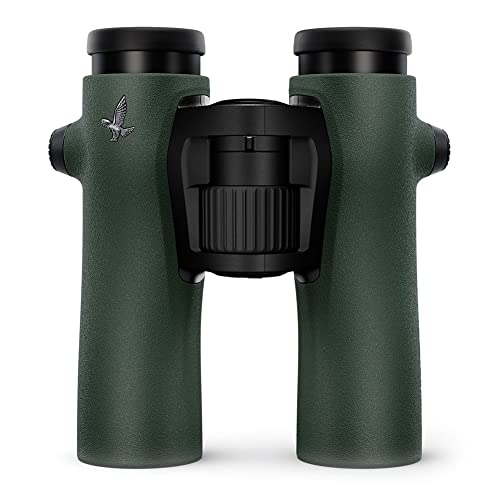 SWAROVSKI Optik NL Pure 8x32 Binoculars |
8.4/10 | Buy | |
| Best Budget |
 Bushnell Spectator Sport 8x32mm Binoculars, Black |
8.1/10 | Buy |
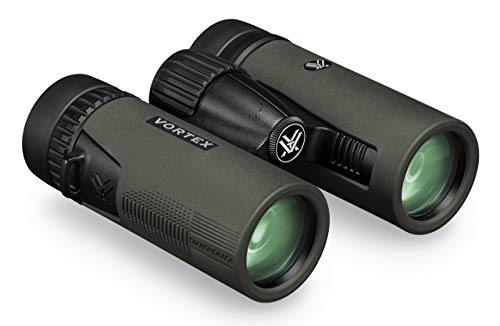 Vortex Diamondback HD 8x32 Binoculars |
8.0/10 | Buy |
Frequently Asked Questions
Why choose an 8×32 binocular over an 8×42 for birding?
An 8×32 binocular provides nearly the same field of view as an 8×42 while cutting overall weight by several ounces. This lighter barrel profile prevents arm tremor and neck fatigue during long glassing hikes in thick woods. While an 8×42 optic gathers slightly more light at dusk, the compact ergonomics of the Best 8×32 Binoculars For Birding make it significantly easier to pack and carry all day.
Is an 8×32 binocular bright enough for bird watching at dawn or dusk?
Yes, an 8×32 optical configuration delivers a 4mm exit pupil that matches normal pupil dilation in moderate twilight. Fully multi-coated lenses and phase-corrected BaK-4 roof prisms maximize light throughput to reveal plumage markings in shaded canopies. In pitch-black dawn conditions, a larger 42mm or 50mm objective lens will appear brighter, but quality 32mm glass handles typical sunrise birding sessions with ease.
How much eye relief do eyeglass wearers need on 8×32 binoculars?
Eyeglass wearers should look for at least 15mm of eye relief to view the full circular image without dark peripheral rings. Multi-stop twist-up eyecups allow users to dial in the exact ocular spacing needed to prevent blackouts and kidney-bean vignetting. Opting for models with generous eye relief guarantees comfortable viewing without forcing you to press your spectacle lenses against the rubber rims.
What close focus distance should you look for in birding optics?
A close focus distance under six feet is ideal for studying nearby songbirds, insects, and flora. Premium models like the KOWA BD III-XD can focus down to 1.3 meters (about 4.3 feet), offering exceptional versatility for backyard wildlife watchers. Optic designs with short minimum focus let you observe fine feather structure on nearby branches without stepping backward.
Does ED glass noticeably reduce chromatic aberration when birding?
Yes, Extra-Low Dispersion (ED) glass elements significantly cut color fringing along high-contrast boundaries. When looking at dark raptors against a bright white overcast sky, standard glass often produces distracting purple or green halos around the silhouette. ED glass aligns wavelengths accurately, delivering sharper plumage contrast and natural color fidelity.
Do you need a tripod adapter for an 8×32 binocular?
No, an 8x magnification is naturally stable enough for steady handheld glassing without a mount. However, pairing your optic with a dedicated binocular tripod adapter is helpful when conducting stationary bird counts or sharing views with group members. Mounting your binos locks the image in place so you can study subtle field marks without any muscle fatigue.
About the author
Phil Harrington is an astronomy educator, author, and experienced optical equipment reviewer with decades of experience exploring the night sky. He has written extensively about telescopes, binoculars, and astronomical observation, combining technical knowledge with practical guidance that helps astronomy enthusiasts understand and select suitable observing equipment.