
Best Astrophotography Adapter Kits for Telescopes of 2026 for Sharp Astro Images
Capture crisp lunar details using best astrophotography adapter kits for telescopes. See dependable visual setups reviewed for September 2026.
 By Edward Ting
Updated September 27, 2026
By Edward Ting
Updated September 27, 2026

Capturing faint planetary contrast or razor-sharp lunar craters through an eyepiece often ends in frustration when camera lenses wobble or sensors sit crooked against the drawtube. Optical axis misalignment causes severe vignetting, fuzzy star trails, and lost focus during critical exposures. Rigid mounting hardware eliminates these optical headaches by locking camera sensors directly to focuser barrels. Dependable connection hardware turns standard backyard optical tubes into capable imaging rigs, making the best astrophotography adapter kits for telescopes essential tools for any stargazer wanting to photograph celestial targets.
Mechanical rigidity determines whether you capture clean planetary detail or smeared light frames. Solid T-rings, multi-axis digiscoping mounts, and dedicated Schmidt-Cassegrain adapters keep sensors square against optical glass without straining focuser drawtubes. Pairing reliable hardware with an understanding of optical mechanics helps you choose the right adapter whether you mount a full-frame DSLR body or a modern smartphone. Planning your stargazing imaging rig alongside the best telescopes for space ensures that faint celestial photons reach your camera sensor with maximum sharpness.
| Award | Product | BSP Score About BSP ScoreThe BSP Score is our own rating from 0 to 10, based on performance, design and build, ease of use, and value. It reflects independent research and is never influenced by manufacturers, retailers, or affiliate commissions. Learn more › | |
|---|---|---|---|
| Best Overall |
tridaptor - Universal Digiscoping Adapter
|
9.1/10 | Buy |
| Best Premium |
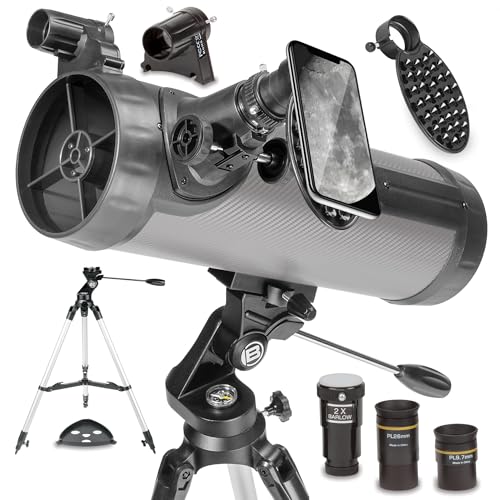 National Geographic 114mm Reflector Telescope
|
9.1/10 | Buy |
| Best Budget |
 Astromania T2 T Ring and T Adapter Compatible
|
8.4/10 | Buy |
 Celestron SCT T-Adapter for Schmidt-Cassegrain
|
8.3/10 | Buy |
Frequently Asked Questions
Can you connect any DSLR camera to a telescope focuser?
Yes, most DSLR cameras connect smoothly to standard 1.25-inch or 2-inch telescope focusers using a camera-specific T-ring and an M42 threaded adapter. Hardware sets like the Astromania T2 thread directly into Canon EOS EF mounts, replacing the camera lens so the telescope operates as a giant prime telephoto lens. Manual focus and manual exposure adjustments remain necessary because basic optical T-adapters do not transfer electronic lens data.
What is the difference between prime focus photography and smartphone digiscoping?
Prime focus connects a standalone camera body directly to the telescope without an intervening eyepiece, whereas digiscoping captures images through an eyepiece using a smartphone. Prime focus delivers uncompromised optical clarity across the sensor with minimal optical aberration. Digiscoping hardware like the tridaptor 3-axis metal mount clamps securely over an eyepiece barrel, making it straightforward to photograph bright objects like the lunar surface.
Why are telescope images blurry when using an astrophotography adapter?
Blurry images usually stem from incorrect focal plane distance, mount vibrations, or slight optical tilt along the drawtube. Telescopes require precise manual focusing because depth of field becomes razor-thin at long focal lengths. Balancing your optical assembly on an equatorial mount, as seen on the HSL 150EQ telescope, helps dampen tripod vibrations during longer camera exposures.
Do beginner reflector telescopes support astrophotography adapter kits?
Yes, many entry-level Newtonian reflectors can host smartphone adapters for bright night sky targets. Packages like the National Geographic 114mm Reflector Telescope include a specialized smartphone adapter suited for imaging lunar craters and bright planets. However, photographing faint nebulae or distant galaxies requires motorized tracking mounts to avoid star trailing during extended exposures.
How does a dedicated Schmidt-Cassegrain T-adapter differ from a standard 1.25-inch adapter?
A Schmidt-Cassegrain adapter threads directly onto the rear cell threads of SCT optical tubes instead of sliding into a 1.25-inch visual back. Hardware like the Celestron SCT T-Adapter provides a rock-solid, wider optical pathway that eliminates barrel slippage and reduces edge vignetting on full-size sensors. This direct-thread connection offers superior stability compared to standard slide-in nosepieces.
Are astrophotography adapter kits safe for solar photography?
No adapter should ever be used for solar imaging without a certified front-aperture solar filter placed over the telescope objective. Direct, unfiltered sunlight entering an optical tube will instantly destroy camera sensors, melt internal components, and cause permanent eye injury. Always verify that a front-aperture solar filter is securely mounted before pointing any optical gear toward the sun.
About the author

Edward Ting writes reviews and buying guides for BSP Review.