
Best Microscope Camera Adapters of 2026 For Clear Imaging
Upgrade specimen imaging using the Best Microscope Camera Adapters in September 2026 for crisp slide details, zero vignetting, and clean sensor alignment.
 By Tony Flanders
Updated September 27, 2026
By Tony Flanders
Updated September 27, 2026

Blurry specimen images and severe edge vignetting ruin microscopic observation faster than bad lighting. Getting high-resolution slide details onto an image sensor demands rigid mechanical alignment and correct optical reduction. Standard eyepieces rarely mate cleanly with camera bodies without dedicated hardware, leaving hobbyists and lab technicians stuck with circular tunnel-vision crops or dark borders. Evaluating the best microscope camera adapters requires examining barrel dimensions, reduction lenses, and camera bayonet threading to secure dependable optical clarity. Reliable optical systems, much like dialed-in close-range target optics, depend on quality glass coatings to prevent glare and light loss.
Optical couplers bridge the gap between biological objectives and modern digital sensors, whether you mount a full-frame DSLR, mirrorless body, C-mount inspection camera, or smartphone. Precision aluminum housing stops mechanical wobble, preserving accurate center focus across high magnifications. Investing in the best microscope camera adapters ensures fine cell structures remain sharp from the center to the edges. Solid lockup and coated reduction optics make documentation clean, repeatable, and frustration-free during long observation sessions.
| Award | Product | BSP Score About BSP ScoreThe BSP Score is our own rating from 0 to 10, based on performance, design and build, ease of use, and value. It reflects independent research and is never influenced by manufacturers, retailers, or affiliate commissions. Learn more › | |
|---|---|---|---|
|
C Mount Adapters Lens 0.5X CTV for Trinocular
|
8.0/10 | Buy | |
| Best Value |
 Microscope Adapter 0.5× C Mount Lens Adapter Set
|
8.8/10 | Buy |
 AmScope CA-CAN-SLR-III Canon Camera Adapter
|
8.9/10 | Buy | |
 0.35X Microscope Adapter,CTV Microscope Lens
|
8.0/10 | Buy | |
| Best Overall |
 Lens Adapter, 23.2mm Microscope T Mount Tube T2
|
9.1/10 | Buy |
| Best Budget |
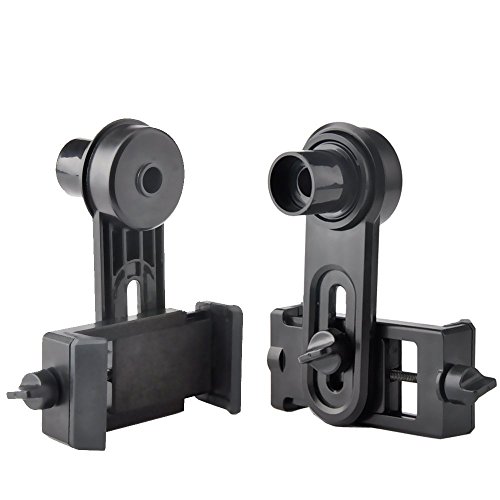 Smartphone Camera Adapter
|
8.1/10 | Buy |
| Best Premium |
 Swift Microscope Lens Adapter
|
8.9/10 | Buy |
 AmScope CA-NIK-SLR Nikon SLR/D-SLR Camera Adapter
|
8.3/10 | Buy |
Frequently Asked Questions
What does a 0.5x reduction lens do on a microscope camera adapter?
A 0.5x reduction lens cuts incoming optical magnification in half to widen the camera field of view and match smaller digital sensor sizes. Without reduction glass, small CMOS or CCD sensors capture only a narrow, heavily cropped center section of your slide. Adding an optical reduction element reduces vignetting and aligns the digital picture with what you see through standard eyepieces. Multi-coated reduction lenses preserve ambient light transmission, mirroring the anti-reflective coatings found on quality hunting scopes.
How do barrel diameters affect microscope camera adapter compatibility?
Microscope ocular and photo ports generally adhere to 23.2mm, 30mm, or 30.5mm internal diameter standards. Standard biological compound units feature 23.2mm eye tubes, while larger stereo dissection heads regularly utilize 30mm or 30.5mm ports. Adapter sleeves or step-up collars allow a single camera coupler to fit securely across different barrel sizes without wobble. A snug physical fit prevents optical canting that causes one-sided edge blur.
Why does a camera view show dark circular borders on screen?
Dark circular borders occur when the camera sensor dimensions exceed the size of the projected image circle. Using a dedicated adapter with an optical reduction lens spreads the light cone evenly across the entire active sensor surface. Full-frame DSLRs and mirrorless models often need 2X magnification adapters to prevent dark edges, while compact digital eyepieces perform better with 0.35x or 0.5x reduction couplers. Choosing the right optical match ensures edge-to-edge frame illumination without digital zooming.
Can DSLR and mirrorless cameras achieve true parfocality with eyepieces?
Yes, parfocality is achievable when using an adjustable T-mount or C-mount adapter equipped with fine-focus adjustment threads. Parfocality keeps both the camera sensor and the visual eyepieces sharply focused simultaneously on the same subject plane. Proper optical spacing saves time by eliminating constant refocusing between direct viewing and recording photos. Setting precise mechanical distances provides consistency similar to adjusting zero stops on precision tactical optics.
Are smartphone camera adapters suitable for high-magnification documentation?
Smartphone adapters offer a convenient, cable-free solution for classroom teaching and quick lab snapshots, provided the phone clamp stays centered. Rigid brackets fit around 26mm to 28mm or 23.2mm eyepiece housings to align phone lenses directly above the ocular glass. They remove the need for dedicated desktop software, saving images straight to mobile storage. Blocking ambient room light leaks around the eyepiece clamp remains critical for preserving image contrast.
What is the difference between C-mount and T2-mount adapters?
C-mount adapters use a 1-inch threaded interface designed for specialized digital inspection cameras, while T2-mount adapters use larger M42x0.75 threads for consumer camera bayonet rings. C-mount couplers usually house internal reduction glass to match tiny industrial sensors. T2-mount adapters connect directly to SLR and mirrorless lens bayonet rings for rigid, full-aperture light transfer.
About the author

Tony Flanders writes reviews and buying guides for BSP Review.