
How to Read Rifle Scope Magnification: A Practical Guide for 2026
Learn how to read rifle scope magnification numbers, zoom ratios, and objective lens sizes to match your shooting needs accurately for November 2026.
 By Edward Ting
Updated October 20, 2026
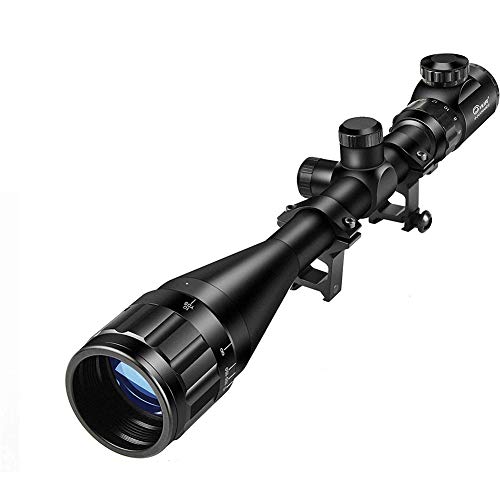

Selecting an optical sighting system often begins with deciphering a sequence of numbers printed on the box or engraved into the ocular housing. Understanding how to read rifle scope magnification allows hunters, target shooters, and practical carbine competitors to interpret exactly how an optic will render downrange targets. These numerical designations indicate how much larger a target will appear relative to the naked eye and define the physical dimensions of the front glass element. Matching your rifle platform with suitable optics, such as finding a dedicated large objective hunting scope, requires a firm grasp of these optical specifications before mounting any hardware.
Optical manufacturers standardize these naming conventions to communicate magnification reach, internal erector zoom ratios, and low-light transmission geometry at a glance. A configuration like 3-9×40 or 6-24×50 represents far more than simple zoom power; it dictates field of view, exit pupil brightness, eyebox latitude, and physical mounting requirements. Selecting the incorrect magnification range can lead to narrow fields of view in dense timber or insufficient target definition on distant steel plates. This detailed guide breaks down every component of optic magnification labeling so you can dial in your setup with absolute confidence.
| Award | Product | BSP Score About BSP ScoreThe BSP Score is our own rating from 0 to 10, based on performance, design and build, ease of use, and value. It reflects independent research and is never influenced by manufacturers, retailers, or affiliate commissions. Learn more › | |
|---|---|---|---|
| Best Overall |
CVLIFE Hunting Rifle Scope 6-24x50 AOE Red
|
9.2/10 | Buy |
| Best Budget |
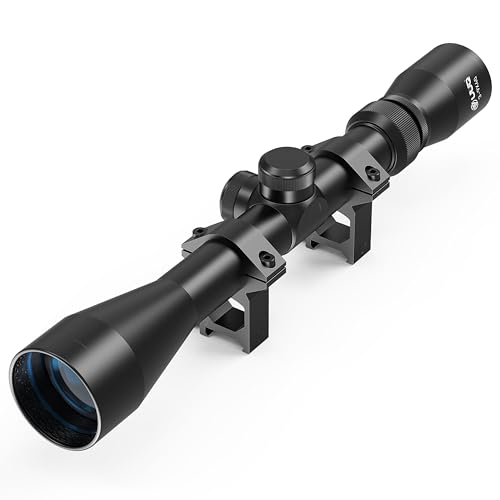 UUQ 3-9x40 Rifle Scope, Rangefinder Reticle |
8.8/10 | Buy |
 CVLIFE 3-9x40 Rifle Scope |
8.8/10 | Buy | |
| Best Premium |
 CVLIFE EagleFeather 40mm Multi-Reticle Red/Green |
8.1/10 | Buy |
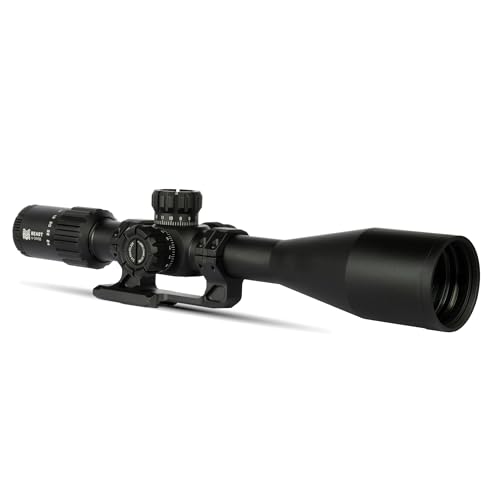 Monstrum Beast 6-24x50 Rifle Scope with Side Focus |
8.0/10 | Buy |
Deconstructing Optical Magnification and Scope Labeling
Rifle scope designations follow a clean mathematical formula that separates optical power from physical glass aperture. Reading these numbers accurately prevents costly setup mismatches on the firing line or in the field. Every variable rifle optic uses specific conventions to define its minimum power, maximum power, and objective lens diameter.
The Anatomy of Scope Markings: Breaking Down the Formula
The standard format used across the optics industry appears as numbers separated by an “x” or a hyphen, followed by an objective measurement. When you look at an optic marked 3-9×40, the initial number “3” designates the lowest optical magnification available on the power ring. This means an image viewed through the lens system at its lowest setting appears three times larger than when viewed with the unaided naked eye. The second number, “9”, indicates the maximum optical zoom, bringing the target nine times closer to the shooter.
The lowercase “x” stands for “by” or “times,” serving as the separator between magnification power and mechanical dimensions. The number appearing directly after the “x” indicates the clear diameter of the objective lens bell measured in millimeters. In a 3-9×40 optic, the objective glass spans 40 millimeters across. Similarly, high-magnification models such as the CVLIFE Hunting Rifle Scope 6-24×50 AOE Red provide a power adjustment range spanning 6x up to 24x magnification, seated behind a generous 50mm objective lens that gathers available ambient light.
Fixed-power optics omit the hyphen entirely because their internal erector lens assemblies do not shift along the optical axis. An optic designated as 4×32 or 3x provides a single, unchanging magnification level without a rotatable power ring. Tactical setups like the CVLIFE EagleFeather 40mm Multi-Reticle Red/Green paired with a dedicated 3X magnifier showcase this fixed principle, where the auxiliary optical magnifier delivers a steady three-power enlargement over an unmagnified illuminated dot sight.
Fixed vs Variable Optics: Understanding Mechanical Zoom Ratios
Variable-power scopes dominate modern hunting and precision shooting due to their operational flexibility. A shooter can rotate the magnification ring collar near the ocular lens to transition between a wide perspective and detailed target identification. The difference between the minimum and maximum power levels defines the optic’s internal zoom ratio. Determining this ratio requires dividing the highest magnification setting by the lowest magnification setting.
A classic 3-9x configuration represents a standard 3x zoom ratio because nine divided by three equals three. More complex mechanical erector assemblies, such as a 6-24x design like the Monstrum Beast 6-24×50 Rifle Scope with Side Focus, provide a 4x zoom ratio since twenty-four divided by six equals four. Higher zoom ratios, such as 6x or 8x systems, require more intricate multi-lens internal groupings. While larger ratios offer immense versatility across varying engagement distances, they also demand precise glass grinding to prevent optical aberrations and edge distortion.
Fixed optics eliminate moving internal erector assemblies, which inherently simplifies their mechanical layout. With fewer glass elements shifting internally, fixed optics often provide exceptional durability and reduced overall weight. However, variable systems give shooters the tactical edge of dialing down to track moving game in thick cover or cranking the magnification up for deliberate shot placement on distant target silhouettes.
Objective Lens Diameter: Light Gathering and Exit Pupil Geometry
The objective lens diameter plays a massive role in low-light target resolution during civil dawn and dusk feeding windows. While magnification enlarges target features, the front objective bell controls the physical cone of light transmitted into the scope tube. A larger objective lens captures more optical photons, but the usable light reaching the shooter’s retina depends entirely on the mathematical exit pupil.
Exit pupil diameter is calculated by dividing the objective lens diameter in millimeters by the active magnification setting. On a UUQ 3-9×40 Rifle Scope, Rangefinder Reticle set at 3x magnification, dividing 40 by 3 produces a wide exit pupil beam of approximately 13.3 millimeters. Because the average human eye pupil dilates to roughly 5 to 7 millimeters in dim conditions, this 13.3mm beam completely saturates the eye with light, making eye alignment exceptionally quick and forgiving.
When you dial that same optic up to its maximum 9x setting, the math changes dramatically. Dividing 40 millimeters by 9 yields an exit pupil beam of just 4.44 millimeters. In bright midday sun, where the human pupil constricts to 2 or 3 millimeters, a 4.44mm beam appears crisp and fully illuminated. At dusk, however, a restricted exit pupil makes the sight picture appear darker and demands precise, unforgiving head placement directly behind the ocular center.
Optics featuring large 50mm bells maintain larger exit pupils at elevated magnification ranges. A 50mm lens dialed to 10x produces a 5mm exit pupil, matching low-light biological eye dilation perfectly. Shooters pursuing benchrest accuracy often review optics built for static rests, such as specialized benchrest precision shooting optics, to balance higher magnification powers against physical light collection geometry.
Field of View and Eyebox Behavior Across the Zoom Spectrum
Field of view describes the lateral width of terrain visible through the optic at a specific distance, universally measured in feet at 100 yards. Field of view shares an inverse mathematical relationship with optical magnification. As you dial the power ring higher, your downrange target appears significantly larger, but the total visible landscape contracts rapidly.
The specifications for the CVLIFE 3-9×40 Rifle Scope clearly illustrate this physical optical tradeoff. At 3x power, the optic yields a generous linear field of view spanning 40.38 feet at 100 yards, allowing hunters to maintain situational awareness and lead moving targets. When dialed up to 9x, the field of view narrows to just 13.41 feet at 100 yards. This tight optical window assists in pinpointing vital zones on static targets, but it severely limits tracking ability if game suddenly bolts through brush.
Eyebox forgiveness also contracts as magnification climbs toward its upper mechanical limit. The eyebox represents the lateral, vertical, and axial latitude a shooter has behind the ocular lens before black crescent vignetting obscures the sight picture. At low power settings, generous eye relief and wide exit pupils allow shooters to achieve a clean sight picture from awkward, unsupported field positions. At peak magnification, head placement must remain rigidly aligned along the optical bore axis to eliminate shadow rings.
First Focal Plane vs Second Focal Plane: How Magnification Scales Reticles
The physical location of the reticle within the internal erector assembly dictates how the aiming crosshairs interact with magnification adjustments. In a Second Focal Plane (SFP) configuration, the reticle assembly sits behind the magnifying erector lenses, directly adjacent to the ocular assembly. Consequently, an SFP reticle maintains a constant, unchanging physical appearance and line thickness regardless of where the power ring is dialed.
Second Focal Plane scopes, such as the Monstrum Beast 6-24×50 Rifle Scope with Side Focus featuring FIB04 reticle options, offer heavy, visible crosshairs that remain easy to track against dark backgrounds even at minimum zoom. However, this design carries a critical ballistic consideration: reticle holdover subtensions, rangefinding stadia, and windage hash marks are mathematically calibrated to be accurate at only one specific power setting, which is almost universally maximum zoom. If an SFP shooter attempts to use reticle drop marks at half power without calculating conversion math, downrange impacts will drift completely off target.
First Focal Plane (FFP) optics position the reticle in front of the erector magnifying lens group. As magnification increases, the reticle crosshairs visibly grow in direct proportion to the target image. This proportional scaling means that angular subtensions, whether measured in Minute of Angle (MOA) or Milliradians (MRAD), remain mathematically accurate across the entire magnification range. FFP systems excel in long-range precision tactical competitions where rapid holdovers must remain reliable across any selected power ring setting.
Parallax Adjustment, Diopters, and High-Magnification Focus
High magnification magnifies optical errors just as efficiently as it enlarges downrange targets. Parallax error occurs when the downrange target image and the internal reticle crosshair do not project onto the exact same focal plane inside the scope. When this mismatch exists, slight movements of the shooter’s head cause the reticle crosshair to appear to float or swim across the target, introducing unaccounted point-of-impact shift.
Standard hunting scopes configured in the 3-9x range generally feature fixed parallax calibration, set at the factory to remain parallax-free at 100 yards. Because low magnification maintains a relatively forgiving depth of field, fixed parallax introduces negligible error inside standard big game hunting distances. However, optics reaching beyond 10x magnification require dedicated focus dials to resolve target focus and eliminate optical parallax shift across varying yardages.
Optics like the CVLIFE Hunting Rifle Scope 6-24×50 AOE Red feature an Adjustable Objective (AO) bell mechanism on the front housing, while precision tactical designs utilize a third turret knob known as side focus. Adjusting the side focus knob aligns the target image directly onto the reticle plane, sharpening distant image resolution and locking the crosshair solidly onto the target. Shooters must distinguish between parallax adjustment and the ocular fast-focus diopter, which sharpens only the reticle crosshair to the individual shooter’s specific eye prescription.
Mounting, Eye Relief Safety, and Tube Clearance Considerations
Understanding magnification labeling directly influences mechanical ring selection and safe firearm integration. Eye relief defines the optimal distance between the shooter’s eye and the ocular lens glass required to achieve a full, unvignetted sight picture. The CVLIFE 3-9×40 Rifle Scope provides an eye relief window spanning 2.95 to 3.94 inches, shifting slightly as the power ring rotates through its mechanical track.
Before mounting or adjusting any optic, verify that your firearm is completely unloaded with the magazine removed, the action locked open, and the chamber visually inspected. Always point the muzzle in a safe direction throughout installation. Setting eye relief must always take place with the scope dialed to its highest magnification setting, where the internal eyebox is at its most restrictive position. Ensuring adequate eye relief spacing prevents dangerous “scope bite,” where violent magnum recoil drives the rear ocular housing into the shooter’s brow.
Objective lens diameter also dictates the required mounting ring height to ensure adequate clearance over the rifle barrel taper. A 40mm scope generally mounts cleanly using low or medium height rings, keeping the optical center line close to the comb of the stock for comfortable cheek weld. Conversely, large 50mm objective bells require medium or high rings to prevent the outer bell housing from contacting the steel barrel contour. Utilizing proper mounting hardware, such as solid precision rifle scope rings, ensures the optic remains solidly locked to the receiver without inducing structural cant errors.
Always tighten ring cap screws using a calibrated torque driver configured strictly in inch-pounds according to manufacturer specifications, typically between 15 and 18 inch-pounds. Over-torquing ring cap screws can easily crush thin aluminum main tubes or bind internal erector springs, permanently damaging magnification zoom tracks and preventing repeatable zero retention. Confirming reticle level with a plumb line or leveling wedge prior to final torquing guarantees that elevation adjustments track true without introducing horizontal drift at extended ranges.
Selecting the Right Magnification Profile for Your Shooting Discipline
Matching scope magnification to your intended shooting discipline prevents carrying unnecessary optical mass or struggling with insufficient target resolution. Dense timber hunting for whitetail deer or feral hogs demands rapid target acquisition inside 100 yards, where broad fields of view reign supreme. Low-power variable configurations like 1-6x or 2-7x, as well as classic 3-9x models, excel in thick brush by allowing hunters to scan terrain with both eyes open before delivering quick, decisive shots.
Open-country western big game hunting across rolling prairies or steep mountain canyons introduces longer engagement distances, often spanning 200 to 500 yards. Hunters navigating these environments benefit from moderate magnification ranges like 4-12x, 3-15x, or 4-16x paired with 44mm to 50mm objective lenses. This balance delivers ample magnification to evaluate antler points and verify backstops while preserving sufficient exit pupil brightness for legal shooting hours at dawn and dusk.
Long-range target shooters, benchrest competitors, and varmint hunters target small silhouettes at extreme distances, necessitating high-magnification glass. Scopes reaching 6-24x, such as the Monstrum Beast 6-24×50 Rifle Scope with Side Focus, provide the precise visual definition required to read mirage and spot bullet impacts on distant steel plates. Pairing these high-magnification systems with adjustable parallax dials ensures clean target focus and repeatable tracking consistency across varied long-range firing strings.
Interpreting rifle scope magnification markings accurately empowers shooters to balance field of view, low-light exit pupil brightness, and mechanical erector capabilities. By evaluating the relationship between zoom power and objective lens diameter, you can select the ideal optical configuration for your specific rifle, caliber, and sporting environment.
About the author
Edward Ting is an experienced amateur astronomer, telescope reviewer, and astronomy educator known for his detailed equipment evaluations. With an engineering background and extensive experience reviewing telescopes and astronomical accessories, he helps astronomy enthusiasts understand optical performance, equipment design, and practical considerations when selecting observing equipment.