
Where Are Primary Arms Scopes Made: Production Tiers and Optics Origins Guide for 2026
Curious where are primary arms scopes made? Explore optic manufacturing tiers, engineering origins, and glass production details for November 2026.
 By Edward Ting
Updated November 7, 2026


Optical clarity and reliable mechanical tracking define modern shooting performance, whether you are running dynamic carbine drills or dialing elevation on distant steel. Shooters researching optics frequently ask where are primary arms scopes made before investing in a dedicated sighting system. Primary Arms Optics conducts all research, optical concept design, reticle engineering, and initial prototyping at its corporate headquarters in Houston, Texas. The company then leverages specialized international optical manufacturing facilities across different countries based on designated product tiers.
Understanding these production origins helps marksmen evaluate glass grades, internal erector tolerances, and housing durability across various price brackets. Shooters pairing precision glass with rifle scopes for bench shooting often balance overall weight, reticle style, and manufacturing origin. The popular SLx line balances affordable overseas production with rigorous stateside quality inspections, ensuring that glass surfaces, turrets, and reticles meet strict performance standards before reaching end users.
| Award | Product | BSP Score About BSP ScoreThe BSP Score is our own rating from 0 to 10, based on performance, design and build, ease of use, and value. It reflects independent research and is never influenced by manufacturers, retailers, or affiliate commissions. Learn more › | |
|---|---|---|---|
| Best Overall |
Primary Arms SLX 1-10x28mm SFP Rifle Scope
|
8.8/10 | Buy |
| Best Budget |
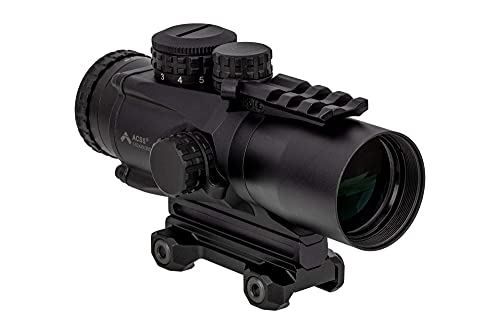 Primary Arms SLX 3x32mm Gen III Prism Scope |
8.4/10 | Buy |
 Primary Arms SLX Compact 4-16X44mm FFP Rifle Scope |
8.1/10 | Buy | |
 Primary Arms SLX 2-12x40mm SFP Rifle Scope |
8.0/10 | Buy | |
 Primary Arms SLX Compact 4-16X44mm FFP Rifle Scope |
7.8/10 | Buy |
A Complete Guide to Primary Arms Optics Manufacturing and Engineering
Primary Arms Optics approaches scope manufacturing through a tiered international sourcing model designed to match specific performance levels with sensible price points. While all engineering concepts, patented reticle designs, and customer support originate in Houston, Texas, actual optical fabrication spans specialized facilities in China, the Philippines, and Japan. This tiered architecture allows the company to produce everything from accessible everyday carbine sights to elite competition optics while maintaining tight quality control standards across every batch.
Understanding the Primary Arms Product Tier System
Primary Arms structures its optic catalog into four primary tiers: Classic Series (CLx), Silver Series (SLx), Gold Series (GLx), and Platinum Series (PLx). Each tier corresponds directly to specific component sourcing, optical glass grade, turret mechanics, and manufacturing country. The entry-level Classic Series focuses on straightforward recreational shooting and rimfire applications with components assembled in China.
The Silver Series, commonly marked as SLx, represents the core lineup for duty rifles, hunting rigs, and competition carbines. Built primarily in China under tight manufacturing tolerances, SLx models incorporate advanced features such as the patented ACSS reticles, fiber-wire illumination, and robust 6061-T6 aluminum tubes. Moving up to the Gold Series (GLx), production shifts to the Philippines, introducing upgraded optical glass, steel-on-steel turret tracking components, and enhanced mechanical adjustments. At the summit, the Platinum Series (PLx) utilizes precision manufacturing in Japan, featuring Japanese extra-low dispersion glass, ultra-crisp optical resolution, and high-end mechanical tracking systems built for military and competitive precision rifle applications.
Engineering and Reticle Innovation in Houston, Texas
Although mechanical assembly of many optics occurs abroad, the core optical innovation happens entirely in the United States. Primary Arms maintains an in-house engineering and research division in Houston that develops optical formulas, internal erector assemblies, and innovative reticle geometries. The company is famous for its Advanced Combined Sighting System (ACSS) reticle platform, which integrates bullet drop compensation, wind holds, target ranging ladders, and moving target leads into intuitive sighting patterns.
Engineers design these reticles to eliminate complex math in the field, allowing marksmen to range silhouette targets and establish holdovers almost instantly. When an optical assembly arrives from overseas production partners, stateside quality assurance technicians inspect mechanical tracking, reticle alignment, and housing seals. Every production batch undergoes sample destructive testing and collimator verification to guarantee that field optics withstand heavy recoil, weather extremes, and constant elevation adjustments.
Manufacturing Details of the Silver Series (SLx) Optic Lineup
The Silver Series represents the vast majority of consumer optics from Primary Arms, including compact variable scopes and rugged prism optics. Manufactured in vetted Chinese optical facilities, SLx models utilize CNC-machined 6061-T6 aircraft-grade aluminum housings treated with durable Type II or Type III hardcoat anodizing. These housings are purged with inert gas and sealed with durable internal O-rings to deliver dependable waterproof, fog-resistant, and shockproof performance in adverse environments.
Optically, SLx scopes feature fully multi-coated glass elements arranged to deliver strong edge-to-edge clarity and bright sight pictures across variable magnifications. For example, variable configurations like the Primary Arms SLX 1-10x28mm SFP Rifle Scope incorporate large 34mm main tubes that maximize internal adjustment travel up to 40 MOA while offering an expansive 110-foot field of view at 1x magnification. Meanwhile, mid-power options like the Primary Arms SLX 2-12x40mm SFP Rifle Scope offer 100 MOA of total elevation travel inside a 30mm tube, demonstrating the mechanical capabilities engineered into this overseas-produced tier.
Prism Optics Engineering and Compact Glass Integration
Prism sighting systems represent another cornerstone of the overseas-manufactured SLx catalog. Models such as the Primary Arms SLX 3x32mm Gen III Prism Scope use solid glass prism assemblies rather than traditional multi-lens erector tubes. This physical design allows the optic to remain exceptionally compact at just 18.4 ounces while delivering a generous 31.5-foot field of view at 100 yards with a large 10.3 mm exit pupil.
Because prism scopes utilize physically etched reticles on glass, shooters suffering from astigmatism enjoy a crisp, sharp sight picture free of the optical distortion or starbursting common with traditional red dot sights. The etched ACSS CQB reticle functions completely without battery power, providing immediate black crosshair contrast against daylight backgrounds. When illumination is activated, the system reaches daylight-bright visibility through eleven distinct output settings, supported by a heavy-duty Gen III mounting base with integrated recoil lugs and large crossbolts.
First Focal Plane versus Second Focal Plane Manufacturing Considerations
A major design choice across the Primary Arms catalog involves reticle focal plane placement. In First Focal Plane (FFP) optics, such as the Primary Arms SLX Compact 4-16X44mm FFP Rifle Scope, the reticle resides at the forward section of the erector assembly. This positioning means the reticle physically grows and shrinks in visual proportion to the selected magnification level, keeping all milliradian subtensions, ranging brackets, and wind hold marks accurate across every power setting.
Conversely, Second Focal Plane (SFP) optics position the reticle behind the magnification erector lens, keeping the reticle lines a constant visual size regardless of zoom. Optics like the Primary Arms SLX 1-10x28mm SFP Rifle Scope rely on high-efficiency fiber-wire illumination to project a daylight-bright central aiming point, functioning like a reflex sight at 1x while reserving ballistic holdovers for maximum 10x magnification. Understanding whether your optic is FFP or SFP ensures you apply ballistic drop tables correctly during extended field shooting.
Reticle Options: ACSS Nova, HUD DMR, and Athena BPR MIL
Reticle variety highlights the proprietary design strength behind Primary Arms scopes. The ACSS Nova reticle utilizes specialized fiber-optic wire technology that channels LED illumination directly to the central dot, producing genuine daylight-bright performance visible even against bright desert backdrops or sunny snow fields. It incorporates intuitive MIL subtensions and moving target leads that allow rapid engagement of dynamic targets from point-blank carbine distances out to mid-range barriers.
For mid-range precision, the ACSS HUD DMR reticle calibrated for .308 Winchester and .223 Remington provides dedicated BDC holdovers out to 1,000 yards alongside integrated target ranging ladders. Shooters who prefer pure angular measurement often select the ACSS Athena BPR MIL reticle found in precision optics like the Primary Arms SLX Compact 4-16X44mm FFP Rifle Scope. This reticle features an infinitely precise chevron tip and a dense 0.5 MIL dot grid extending 15 MIL downward, giving marksmen comprehensive holdover data without requiring manual turret adjustments during active firing strings.
Mechanical Turrets and Internal Tracking Precision
A rifle scope is only as dependable as its internal mechanical erector system. Primary Arms equips its SLx hunting and carbine scopes with low-profile capped turrets to guard against accidental movement when navigating dense brush or vehicle cabs. The adjustment mechanisms deliver positive, tactile clicks calibrated in either 1/4 MOA or 0.1 MIL graduations, depending on the reticle system selected.
Internal erector springs maintain consistent tension against the adjustment screws, ensuring repeatable tracking during field elevation adjustments. Precision shooters using precision rifle scope rings should verify proper alignment to prevent mechanical binding inside the erector housing. Whether dialing 0.1 MIL clicks on an extended target or locking zero behind protective aluminum turret caps, these assemblies provide dependable return-to-zero capabilities across years of practical recoil cycles.
Proper Scope Ring Selection and Torque Specifications
Mounting an optic properly is essential to extract the full mechanical and optical performance engineered into Primary Arms scopes. Before beginning any mounting procedure, always verify that your firearm is completely unloaded, magazine removed, and the action locked open with the muzzle pointed in a safe direction. Always match your ring diameter directly to the scope main tube, such as selecting 30mm rings for the SLx 2-12x40mm or 34mm rings for the SLx 1-10x28mm model.
Proper ring height ensures that the objective bell clears the rifle barrel contour while establishing a comfortable, natural cheek weld. For large optics or rifles with heavy barrel contours, choosing appropriate ring heights similar to those used on hunting rifle scopes for low light prevents the front bell from contacting the metal barrel. When fastening ring screws, always utilize an inch-pound torque wrench calibrated to manufacturer specifications, typically 15 to 18 inch-pounds for ring caps and 30 to 35 inch-pounds for crossbolts. Over-tightening ring screws will crush the main tube, pinching the internal erector tube and causing sluggish or frozen turret tracking.
Parallax Adjustment and Fast-Focus Diopter Calibration
Many marksmen confuse ocular diopter adjustment with side parallax focus, leading to optical frustration and perceived blurriness. The fast-focus diopter at the ocular bell calibrates the reticle sharpness directly to the shooter’s unique optical prescription. To adjust the diopter correctly, look through the scope at a blank white wall or open sky for short two-second intervals, rotating the diopter ring until the black crosshairs appear instantly sharp without eye strain.
Once the diopter is calibrated, the side-focus parallax turret is used in the field to eliminate optical parallax and bring the target image into exact focus. Optics such as the SLx Compact 4-16x44mm and SLx 2-12x40mm feature side parallax dials that adjust from 10 yards to infinity. This close-focus ability makes these scopes exceptionally versatile, allowing precision focus on close-range rimfire targets as well as extreme-distance centerfire steel without reticle swim or point-of-impact shift.
Environmental Sealing and Durability Standards
Field optics must endure harsh atmospheric conditions, drastic temperature swings, and severe physical shocks. Primary Arms constructs its scope bodies from one-piece aircraft-grade aluminum tubes to maximize structural rigidity and resist internal flex. Internal air is purged completely and replaced with dry nitrogen gas to prevent internal lens surfaces from fogging up during sudden temperature transitions.
Durable elastomeric O-rings seal every mechanical joint, including turret stems, magnification selector rings, and lens housings, keeping out external moisture, mud, and dust. The internal erector assemblies are shock-rated to withstand standard centerfire rifle recoil, ensuring zero retention across prolonged firing sessions with cartridges ranging from .223 Remington up to heavy hunting calibers. These environmental safeguards allow hunters and patrol marksmen to deploy their optics confidently in freezing rain, high humidity, or dusty field environments.
Lens Care, Maintenance, and Optical Coating Protection
Preserving glass clarity requires proper maintenance techniques that protect sensitive anti-reflective optical coatings. The exterior lenses of Primary Arms scopes feature advanced multi-coatings that maximize light transmission and minimize chromatic aberration. Wiping dry lenses with a rough cotton shirt or paper towel can drag gritty dust particles across the glass, causing micro-scratches that permanently degrade image contrast.
Always remove loose dirt and debris first using a soft optical lens brush or an inert rubber air bulb blower. If fingerprint oils or water spots persist, apply a drop of specialized optical lens cleaning solution to a microfiber lens cloth and gently clean from the center outward in light circular motions. Always store the optic with clean protective lens covers in place to prevent environmental debris accumulation while traveling to the range or field.
Primary Arms Lifetime Warranty and Consumer Protection
Warranty support serves as a key indicator of manufacturing confidence, and Primary Arms backs its optics with substantial consumer protections. The company offers a comprehensive Limited Lifetime Warranty covering manufacturing defects, materials, and workmanship across its SLx, GLx, and PLx optic lines. This warranty guarantees that if an optic fails mechanically or optically due to a production defect, the company will repair or replace the unit.
Crucially, this lifetime warranty is fully transferable to subsequent owners without requiring original receipts or proof of purchase. Knowing that warranty support is managed directly from the Houston, Texas headquarters provides significant peace of mind when investing in overseas-manufactured optics. Marksmen receive responsive customer service, professional inspection, and dedicated technical support backed by a well-established American firearm optics brand.
Selecting the right optic ultimately comes down to matching your shooting discipline, optical magnification needs, and mechanical requirements with the appropriate production tier. By combining American reticle innovation and quality control with cost-effective overseas manufacturing facilities, Primary Arms provides dependable sighting options that deliver consistent field precision across diverse rifle platforms.
About the author
Edward Ting is an experienced amateur astronomer, telescope reviewer, and astronomy educator known for his detailed equipment evaluations. With an engineering background and extensive experience reviewing telescopes and astronomical accessories, he helps astronomy enthusiasts understand optical performance, equipment design, and practical considerations when selecting observing equipment.