Best Astrophotography Telescopes for Beginners of 2026 For Sharp Night Sky Imaging
Capture crisp celestial photos with the best astrophotography telescopes for beginners in September 2026, balancing tracking, optics, and value.
 By bsr_admin
Updated September 27, 2026
By bsr_admin
Updated September 27, 2026
Long-exposure star trails and blurry planetary shots quickly ruin early attempts at night sky imaging. You line up the Moon or Orion, snap a picture through your phone or camera sensor, and end up with washed-out fuzz from tracking drift or shaky tripod legs. Selecting the best astrophotography telescopes for beginners requires balancing optical aperture against mount stability, because even pristine glass cannot save an image if the mount vibrates at the slightest touch. Many backyard stargazers start by attaching a smartphone adapter to an entry refractor or Newtonian reflector, while others step directly into automated smart systems. Pairing your optical tube with reliable telescope finder scopes makes locating targets far easier before taking exposures.
Aperture size and focal ratio dictate how much light reaches your sensor during integration sessions. Compact refractors offer quick cooldown times and wide fields for bright nebulae, whereas larger Newtonian mirrors gather extra photons for faint deep-sky targets. Smart scopes now automate target acquisition, tracking, and live stacking through mobile apps, eliminating complex polar alignment routines. Evaluating optical specifications, focuser rigidity, and tracking mechanics ensures your investment captures sharp astronomical details rather than frustrating blurs under suburban skies.
| Award | Product | BSP Score About BSP ScoreThe BSP Score is our own rating from 0 to 10, based on performance, design and build, ease of use, and value. It reflects independent research and is never influenced by manufacturers, retailers, or affiliate commissions. Learn more › | |
|---|---|---|---|
| Best Overall |
 90mm Telescope for Adults High Powered
|
9.2/10 | Buy |
| Best Budget |
 Gskyer Telescope, 70mm Aperture 400mm AZ Mount
|
8.4/10 | Buy |
| Best Premium |
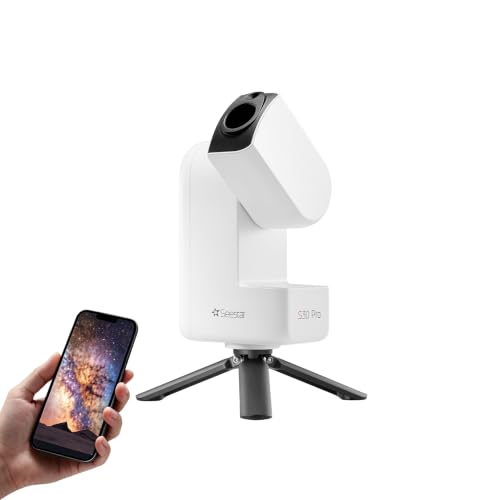 ZWO Seestar S30 Pro Smart Telescope
|
8.3/10 | Buy |
 Telescope for Adults & Kids
|
8.1/10 | Buy | |
 Celestron AstroMaster 130EQ Telescope for Deep-Sky
|
8.0/10 | Buy |
Frequently Asked Questions
Can you do astrophotography with an alt-azimuth mount?
Yes, but only for short exposures of the Moon and bright planets. Alt-azimuth mounts move up-down and left-right, which introduces field rotation in long exposures over twenty seconds. To capture faint nebulae or galaxies without star trailing, an equatorial mount or a smart telescope with automated frame stacking is much more effective.
What optical design is best for entry-level astrophotography?
Small refractor telescopes and all-in-one smart telescopes generally offer the easiest learning curve for beginners. Achromatic and apochromatic refractors require zero optical collimation and deliver wide, crisp fields of view that forgive slight alignment errors. While a Newtonian reflector provides larger aperture per dollar, as seen in manual German equatorial telescope setups, it demands regular mirror alignment and sturdier mounting.
Why does focal ratio matter for capturing deep-sky objects?
A fast focal ratio between f/4 and f/6 captures light significantly faster on camera sensors than slow optics. Lower f-numbers mean shorter exposure times are needed to record faint nebulosity, reducing tracking errors caused by mount drift. Higher focal ratios like f/10 or f/12 provide higher magnification for lunar craters but require much longer exposures for deep-space targets.
Do you need a dedicated astronomy camera to start astrophotography?
No, you can begin capturing lunar and planetary images using a modern smartphone or DSLR camera. Many beginner telescopes include phone adapters and wireless shutter remotes to eliminate camera shake during exposure. As your imaging skills advance, studying practical telescope guides and sky atlases will help you transition from mobile digiscoping to dedicated cooled astronomy cameras.
How does light pollution affect beginner astrophotography under suburban skies?
Light pollution washes out faint contrast on galaxies and nebulae, but lunar and planetary imaging remains largely unaffected. Modern smart astrophotography scopes combat suburban skyglow by using integrated dual-band light pollution filters and automated background noise reduction algorithms. Observers shooting through standard glass can also add screw-on narrowband filters to target emission nebulae from high-Bortle backyard locations.
Is solar photography safe with beginner telescopes?
No, solar imaging or observing is never safe without a certified, front-mounted aperture solar filter. Pointing an unfiltered telescope at the Sun will instantly destroy camera sensors and cause permanent blindness if viewed through an eyepiece. Never attempt solar photography using makeshift filters or eyepiece-threaded solar glass.
About the author

bsr_admin writes reviews and buying guides for BSP Review.