
Best Automatic Telescopes of 2026 for Easy Stargazing
Track planets effortlessly with the Best Automatic Telescopes for September 2026. Compare motorized GoTo mounts and smart optics that locate stars fast.
 By Edward Ting
Updated September 27, 2026
By Edward Ting
Updated September 27, 2026

Navigating the Night Sky Without Alignment Frustrations
Star hopping through light-polluted suburban skies often turns an exciting night into a frustrating guessing game. Trying to center a faint nebula with a basic finderscope while fighting neck strain can test anyone’s patience. Modern optical systems eliminate that friction by pairing digital sky recognition with motorized drives to acquire targets in seconds. Investing in the best automatic telescopes lets you spend your hours observing sharp lunar rilles and planetary disks instead of flipping through paper charts. Whether you pair your gear with telescope options for young stargazers or head out alone, automated tracking keeps celestial objects centered in your view.
Solid mount stability and genuine optical aperture matter far more than inflated magnification claims printed on retail packaging. High-quality optical designs like Maksutov-Cassegrains and Newtonian reflectors capture essential photons, while internal motors counteract Earth’s rotation to prevent targets from drifting away. A sturdy tripod dampens vibrations quickly so high-power views remain steady. Based on optical specifications and user feedback, modern automation helps bridge the gap between technical hurdles and immediate stargazing enjoyment. Selecting reliable tracking hardware ensures your telescope gets regular use under the stars rather than collecting dust.
| Award | Product | BSP Score About BSP ScoreThe BSP Score is our own rating from 0 to 10, based on performance, design and build, ease of use, and value. It reflects independent research and is never influenced by manufacturers, retailers, or affiliate commissions. Learn more › | |
|---|---|---|---|
| Best Overall |
DWARFLAB Dwarf Mini Smart Telescope
|
9.1/10 | Buy |
| Best Budget |
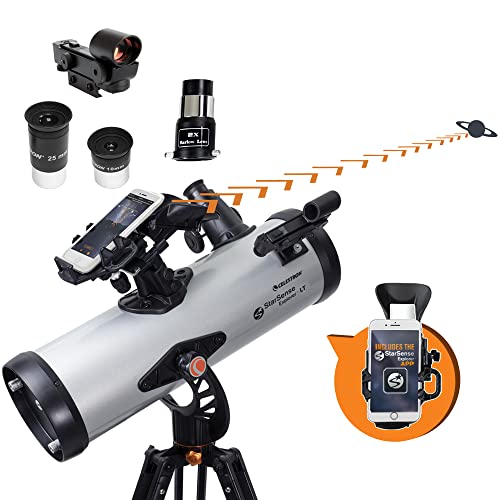 Celestron StarSense Explorer LT 114AZ Newtonian
|
8.4/10 | Buy |
| Best Value |
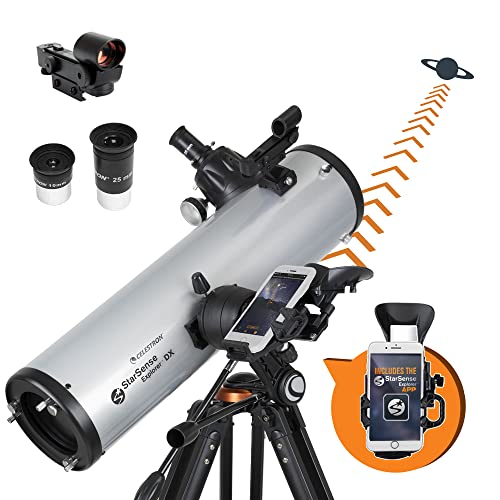 Celestron StarSense Explorer DX 130AZ Smartphone
|
8.3/10 | Buy |
 Celestron NexStar 127SLT Maksutov-Cassegrain
|
8.3/10 | Buy | |
| Best Premium |
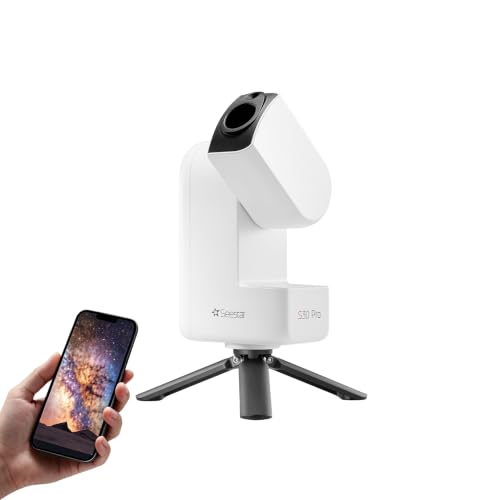 ZWO Seestar S30 Pro Smart Telescope
|
8.3/10 | Buy |
 Celestron NexStar 6SE Schmidt-Cassegrain Telescope
|
8.1/10 | Buy |
Frequently Asked Questions
Do the best automatic telescopes work well under suburban light pollution?
Yes, computerized models excel at locating targets through suburban skies because they rely on internal databases or plate solving rather than naked-eye star hopping. Sky glow washes out faint nebulae, but bright objects like the Moon, Jupiter, Saturn, and double stars remain striking. Smart models like the ZWO Seestar S30 Pro Smart Telescope even feature integrated light pollution filters to isolate celestial emissions from city glow.
How does motorized GoTo alignment differ from smartphone-guided plate solving?
Motorized GoTo systems use internal motors to physically slew the optical tube, whereas smartphone-guided systems rely on you to push the mount manually. GoTo telescopes like the Celestron NexStar 127SLT Maksutov-Cassegrain automatically track celestial objects once aligned. Systems like the StarSense Explorer DX 130AZ use your phone camera to calculate coordinates, but you follow on-screen arrows by hand.
What is the difference between a smart digital telescope and a computerized optical scope?
Smart digital telescopes replace traditional eyepieces with an integrated camera sensor that streams live images directly to your phone. Models like the DWARFLAB Dwarf Mini Smart Telescope capture short exposures and stack them electronically. Computerized optical scopes like the Celestron NexStar 6SE Schmidt-Cassegrain Telescope use standard eyepieces, allowing your eyes to gather real photons directly through high-grade glass.
Can an alt-azimuth automatic telescope capture long-exposure deep-sky photos?
No, standard alt-azimuth mounts cannot track deep-sky targets for long single exposures without producing field rotation. Because alt-azimuth mounts move up-down and left-right, stars near frame edges show rotation during long exposures. For deep-sky imaging, astrophotographers often turn to an equatorial setup like a manual Newtonian reflector setup or use smart digital scopes with live stacking.
How do beginners learn constellations when using automatic telescopes in 2026?
Automated mounts help beginners learn the sky faster by providing instant context for every target they observe. Companion apps display interactive star charts and sky tours showing exactly which constellations host your selected targets. Consulting trusted stargazing guides and astronomy books alongside your computerized scope helps build solid observational knowledge.
About the author

Edward Ting writes reviews and buying guides for BSP Review.