
Top Best Spy Telescopes of 2026 for Handheld Clarity
Compact brass optics deliver sharp views. See the best spy telescopes for November 2026 with clear magnification and durable maritime style.
 By Phil Harrington
Updated September 28, 2026
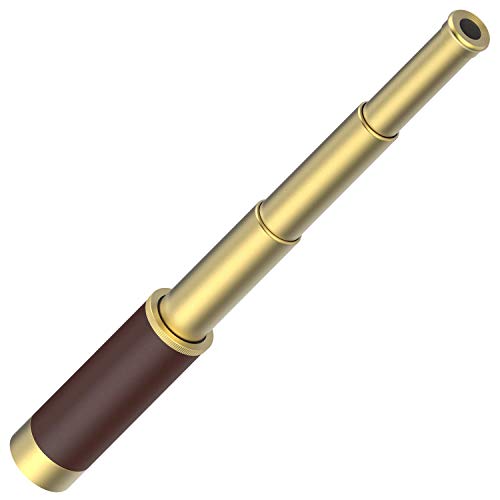

Handheld brass optics often suffer from narrow fields of view, frustrating push-pull focus mechanisms, and distracting image shake when magnifications push past realistic optical limits. A compact spyglass needs solid glass elements and tight mechanical tolerances so the sliding tubes stay rigid while targeting distant landmarks or scanning open water. Striking the right balance between authentic maritime styling and functional optical clarity can feel daunting with so many decorative replicas on the market. That is why identifying the best spy telescopes requires looking past gleaming brass coatings to inspect actual lens performance, magnification power, and mechanical collapsibility.
Classic maritime brass tubes share many design elements with traditional nautical telescopes, yet portable spyglasses must remain light enough for handheld outdoor use. Optical specifications like a 30mm objective aperture and clear coated lenses make a noticeable difference in image brightness during daytime glassing or casual twilight observations. Careful analysis of user feedback, drawtube friction, and optical alignment shows that modern collapsible scopes can deliver genuine visual reach without turning into fragile display pieces. A reliable spyglass monocular provides quick magnification in a pocket-friendly footprint, making it a fun, practical tool for hiking trails, boating, and historic collections.
| Award | Product | BSP Score About BSP ScoreThe BSP Score is our own rating from 0 to 10, based on performance, design and build, ease of use, and value. It reflects independent research and is never influenced by manufacturers, retailers, or affiliate commissions. Learn more › | |
|---|---|---|---|
| Best Overall |
Pirate Monocular Telescope
|
8.0/10 | Buy |
| Best Value |
 Antiqula 1920 Vintage Brass Telescope with |
7.8/10 | Buy |
Frequently Asked Questions About Spyglass Telescopes
How do you focus a collapsible spyglass telescope?
You focus a collapsible spyglass by fully extending all drawtubes and then slowly sliding the eyepiece section inward until the target appears sharp. Push-pull focus mechanisms rely on smooth friction rather than rotary focus wheels. Moving the tubes too quickly causes you to overshoot the focal point. Keeping both hands steady on the main barrel prevents unnecessary vibration while adjusting the drawtubes.
Can you use the Best Spy Telescopes of 2026 for backyard stargazing?
Yes, but handheld spyglasses are limited to viewing the Moon and bright open star clusters. With objective apertures around 30mm, these optics do not collect enough light for faint nebulae or distant galaxies under suburban skies. Hand tremors also become noticeable at 15x or 25x power, making prolonged celestial observation difficult without bracing against a railing. Observers seeking dedicated planetary or lunar detail often compare these optics alongside budget kids telescopes or tabletop setups that include rigid support mounts.
What does 25×30 magnification mean on a handheld spyglass?
A 25×30 specification indicates 25 times optical magnification paired with a 30mm objective lens diameter. The 25x power makes distant targets appear twenty-five times closer than with the naked eye. The 30mm front lens determines how much light enters the optical tube. While 25x magnification offers impressive reach, the smaller 30mm opening creates a narrower field of view that requires steady aiming.
Are vintage brass spyglasses waterproof and suitable for outdoor use?
Most decorative brass spyglasses offer only basic splash resistance, though some modern designs incorporate sealed optical housings. Models wrapped in protective leather with brass-plated alloy bodies easily handle light moisture during hiking or boating. Complete submersion will allow water between the sliding drawtubes, which can cloud the internal glass elements. Keeping the optical tube in a dry leather storage pouch preserves lens clarity and prevents exterior tarnishing.
Why does the image shake when looking through a 15x or 25x brass telescope?
Image shake occurs because high optical magnification amplifies tiny hand tremors and body movements. At 15x or 25x power, minor muscle twitches cause wide swings in your visual field. Resting your arms on a firm surface, vehicle hood, or fence rail immediately calms image jitter. Choosing lower magnification, such as 15x, inherently provides a steadier handheld view compared to higher-powered drawtubes.
About the author
Phil Harrington is an astronomy educator, author, and experienced optical equipment reviewer with decades of experience exploring the night sky. He has written extensively about telescopes, binoculars, and astronomical observation, combining technical knowledge with practical guidance that helps astronomy enthusiasts understand and select suitable observing equipment.