Best Telescopes for Stars and Planets of 2026 for Backyard Stargazing
Explore top optical gear with the best telescopes for stars and planets in September 2026 to resolve crisp craters, Saturnian rings, and bright nebulae.
 By bsr_admin
Updated September 27, 2026
By bsr_admin
Updated September 27, 2026
Starting a backyard observing session often turns into an exercise in frustration when wobbly aluminum tripods blur the view of lunar craters at the slightest touch. Cheap glass optics with heavy chromatic aberration wash out planetary contrast, turning Saturn and Jupiter into blurry smudges surrounded by purple halos. Selecting the best telescopes for stars and planets requires balancing generous clear aperture with a stable alt-azimuth mount to keep celestial targets centered without endless drift. Whether you want to scan wide star clusters or resolve bright planetary discs from a suburban patio, prioritizing high transmission optical coatings and robust mechanical dampening makes all the difference.
Careful analysis of optical tube assemblies, focal ratios, and bundled accessories reveals that light-gathering power matters far more than exaggerated magnification claims on product packaging. Refractor designs like an 80mm achromatic tube provide quick setup with zero optical collimation hassles, while larger 114mm or 130mm Newtonian reflectors pull faint nebulae out of suburban skyglow. Beginners pairing their optical gear with smartphone plate-solving technology can bypass star-hopping headaches entirely without manual polar alignment. Exploring budget telescopes for young stargazers also highlights how sturdy mounts prevent vibration fatigue during family observation nights.
| Award | Product | BSP Score About BSP ScoreThe BSP Score is our own rating from 0 to 10, based on performance, design and build, ease of use, and value. It reflects independent research and is never influenced by manufacturers, retailers, or affiliate commissions. Learn more › | |
|---|---|---|---|
| Best Overall |
 Celestron StarSense Explorer LT 80AZ Smartphone
|
9.2/10 | Buy |
| Best Budget |
 Koolpte Telescope for Adults & Beginner
|
8.6/10 | Buy |
| Best Value |
 Gskyer Telescope, 70mm Aperture 400mm AZ Mount
|
8.4/10 | Buy |
| Best Premium |
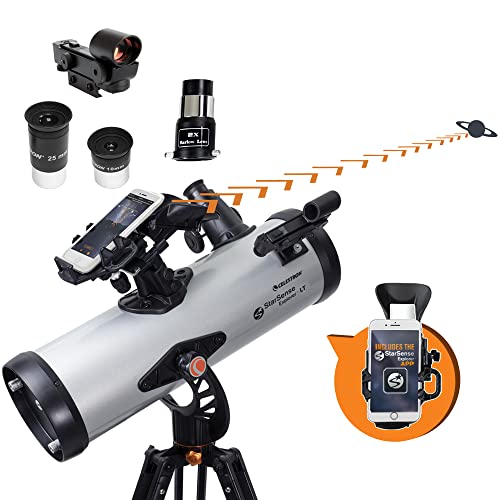 Celestron StarSense Explorer LT 114AZ Newtonian
|
8.4/10 | Buy |
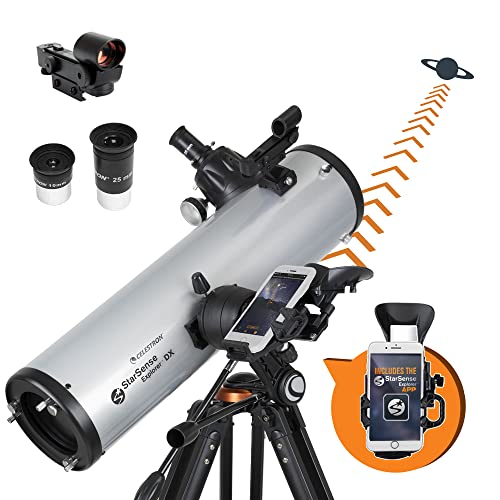 Celestron StarSense Explorer DX 130AZ Smartphone
|
8.3/10 | Buy | |
 Telescope for Adults & Kids
|
8.1/10 | Buy |
Frequently Asked Questions
Can you see the rings of Saturn and cloud bands of Jupiter with an 80mm refractor?
Yes, an 80mm aperture refractor provides enough resolving power and light gathering to reveal Saturn’s rings and Jupiter’s major atmospheric bands. At magnifications between 50x and 100x, bright planets display recognizable surface features and Galilean moons under steady skies. Keep in mind that atmospheric turbulence and light pollution can soften planetary contrast, so observing on calm nights produces the sharpest view.
What is the practical magnification limit for the Best Telescopes For Stars And Planets in 2026?
A reliable rule of thumb is approximately 50x magnification per inch of aperture, or 2x per millimeter. For example, a 70mm telescope tops out at roughly 140x, while a 130mm reflector handles up to 260x under optimal atmospheric seeing. Exceeding these optical thresholds creates empty magnification, yielding dim, fuzzy images without resolving any extra lunar or planetary detail.
Do Newtonian reflectors require regular optical collimation for planetary viewing?
Yes, Newtonian reflectors need occasional optical alignment to maintain pinpoint planetary focus and sharp high-contrast images. Travel, vibration, and temperature swings can shift the primary and secondary mirrors slightly out of alignment over time. Aligning the mirrors takes only a few minutes with a simple collimation cap or laser tool before an observing session. Observers consulting stargazing guides and telescope books often find illustrated diagrams that simplify this routine mirror maintenance.
Are refractor telescopes better than reflector telescopes for beginners?
Refractor telescopes are generally easier for novices because their sealed optical tubes require zero mirror collimation and minimal thermal cooldown time. Their glass lens configuration delivers high-contrast planetary images and tolerates rough handling during backyard transport. Reflectors provide larger aperture diameters per dollar, but entry-level refractors offer a truly grab-and-go experience with virtually no maintenance.
Can you view the Moon and planets under light-polluted suburban skies?
Yes, the Moon and bright planets like Venus, Mars, Jupiter, and Saturn cut through moderate suburban light pollution with ease. Unlike faint nebulae or distant galaxies that wash out under high Bortle ratings, planetary targets possess high surface brightness. Adding a Barlow lens and a quality Plössl eyepiece helps maximize lunar contrast even from an urban balcony.
About the author

bsr_admin writes reviews and buying guides for BSP Review.