Top Best Auto Tracking Telescopes of 2026 for Backyard Stargazing
Automated sky alignment saves hours outdoors. Compare top picks for the best auto tracking telescopes updated for September 2026 with sharp tracking.
 By bsr_admin
Updated September 27, 2026
By bsr_admin
Updated September 27, 2026
Tracking celestial objects through an eyepiece often turns into an exercise in frustration as the Earth’s rotation quickly sweeps targets right out of view. Constant manual nudging shakes the optical tube, turning Saturn’s rings or the Orion Nebula into a jittery blur. Modern motorized mounts solve this headache by automatically counteracting planetary movement with smooth internal gearing. Investing in the best auto tracking telescopes allows you to spend less time centering dim targets and more time studying subtle planetary bands or capturing faint deep-sky structures. These smart motorized platforms combine sensitive optical sensors with automated plate solving to lock onto targets across bright suburban skies.
While classical stargazing with manual equatorial reflector setups teaches sky mechanics, automated optical systems remove the steep learning curve of star hopping. Smart digital units integrate internal optical tubes, automated GoTo alignment, and live image stacking into compact grab-and-go housings. Researching the listed technical specifications reveals how modern apochromatic refractor optics and high-sensitivity CMOS imaging sensors deliver crisp views even without complex optical collimation. Anyone cross-referencing star charts in practical astronomy reference guides can now locate distant galaxies within minutes. Selecting the right rig boils down to balancing total kit weight, sensor resolution, and app software stability for your observing space.
| Award | Product | BSP Score About BSP ScoreThe BSP Score is our own rating from 0 to 10, based on performance, design and build, ease of use, and value. It reflects independent research and is never influenced by manufacturers, retailers, or affiliate commissions. Learn more › | |
|---|---|---|---|
| Best Overall |
 DWARFLAB Dwarf Mini Smart Telescope
|
9.1/10 | Buy |
 Vaonis Vespera 3 - Smart Telescope for Adults
|
8.8/10 | Buy | |
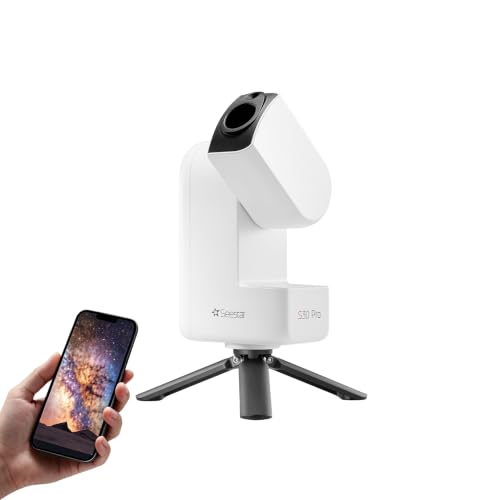 ZWO Seestar S30 Pro Smart Telescope
|
8.3/10 | Buy |
Frequently Asked Questions
Do the Best Auto Tracking Telescopes of 2026 work well under light-polluted suburban skies?
Yes, modern smart tracking telescopes handle suburban light pollution surprisingly well. Built-in light pollution suppression filters and live digital stacking software isolate celestial light from streetlamp glare. Instead of peering through washed-out eyepieces, observers view integrated live frames on a smartphone screen that progressively reveal faint nebulae. However, severe light pollution can still limit the visibility of extremely dim galaxies compared to dark-sky locations.
How does automated tracking differ between an alt-azimuth and equatorial mount?
Alt-azimuth mounts move up-down and left-right, while equatorial mounts tilt along Earth’s rotational axis to prevent field rotation. An alt-azimuth motorized setup tracks objects smoothly for visual stargazing and short digital exposures under thirty seconds. Equatorial tracking or software EQ modes allow extended exposures up to ninety seconds without star trailing around the frame edges. Many portable smart scopes offer software EQ modes or wedge options to support deep-sky imaging.
Can you view planets clearly with compact smart tracking telescopes?
No, compact smart telescopes prioritize wide-field deep-sky objects over high-magnification planetary details. Short focal lengths and wide CMOS sensors capture sweeping nebulae and open clusters beautifully, but planets like Saturn and Jupiter appear relatively small. While lunar craters show excellent contrast, resolving Jupiter’s Great Red Spot or Saturn’s Cassini division typically requires long focal length catadioptric or reflector optics.
Are automated tracking telescopes suitable for beginners and younger stargazers?
Yes, automated systems eliminate the steep learning curve of manual star-hopping and polar alignment. Dedicated mobile applications allow users to tap an object on an interactive sky map, letting motorized servos position the optics within minutes. Many families choose these smart devices over manual beginner telescopes for family stargazing because they prevent the frustration of finding faint targets in the dark.
Do digital tracking telescopes require manual optical collimation?
No, smart telescopes utilizing sealed apochromatic refractor lens designs do not require routine optical collimation. Unlike Newtonian reflectors with primary mirrors that shift during transport, refractor optical tubes maintain factory alignment across bumpy car rides. This factory-sealed construction makes grab-and-go field trips to camping spots or dark-sky sites completely stress-free.
Is internet access required to operate smart auto tracking telescopes in the field?
No, most smart tracking units generate their own independent Wi-Fi or Bluetooth networks to communicate directly with your phone or tablet. The internal computers store comprehensive celestial databases and star maps locally on built-in storage. You can drive out to remote wilderness campsites completely off the grid and control the tracking mount without cellular service.
About the author

bsr_admin writes reviews and buying guides for BSP Review.